By Joseph C. Ben-Ami
By isolating West Berlin as they did, East German authorities created the ideal study of competing political and economic systems. On every metric West Berlin outperformed its socialist competition.
Last week, the 65th anniversary of the building of the Berlin Wall passed with virtually no notice. That’s a shame. Given the resurgent popularity of socialist doctrine, particularly among our youth, it’s well worth recounting the experience of those who lived in East Germany, their desire to escape, and the determination of those in charge to prevent that escape.
East and West Berlin were artifacts of World War II. After the surrender of Germany in 1945, the country was divided into four zones of occupation, each administered by one of the four major allies: America, Britain, France and the Soviet Union. Its former capital, Berlin, was likewise divided into four sectors, each administered by one of the four major allies.
As tensions between the Soviets and their former allies grew into the Cold War, Berlin, due to its geographic location in the heart of the Soviet zone, was an easy target for intimidation. Very early on, the Soviets attempted to force the Western Allies to abandon their positions in the city by imposing a blockade. Beginning June 24, 1948, no food or supplies were permitted to enter West Berlin by land.
In response, the Western Allies mounted the Berlin Airlift, flying everything from food and medicine to clothes and fuel into the city, daring the Soviets to intercept and shoot down their planes. This went on until May 2, 1949, when the Soviets lifted the blockade, but that did not end their effort to dislodge their former allies. Soviet harassment led to numerous stand-offs over the course of the next decade-and-a-half, each threatening to spark a wider confrontation between East and West.
The construction of the Berlin Wall had nothing to do with formal East-West relations though. It was built to prevent the migration of citizens of socialist East Germany – officially the German Democratic Republic (GDR), created in 1949 out of the Soviet occupation zone – from using West Berlin as an entry point to West Germany, also created in 1949 out of the combined zones occupied by the Western Allies.
Although Berlin remained under occupation until 1990, West Berlin enjoyed a remarkable degree of independence, with a democratically elected mayor and governing council, political freedom and a free economy, a tiny island of liberty and prosperity in the heart of the socialist paradise.
The contrast between life in West Berlin and that in both East Berlin and East Germany in its entirety could not have been more pronounced. Residents of East Germany had only to make their way to Berlin’s western neighbourhoods to purchase virtually anything they wanted without line-ups.
They could eat at restaurants, attend the cinema, and above all, talk, argue and debate every subject under the sun in public, without fear of being observed and reported by undercover police, paid informants or just plain citizens wanting to ingratiate themselves with the authorities. In West Berlin, one was free to praise socialism; in the east, it was a crime to be critical.
It is estimated that as many as 3.5 million East Germans fled to the West in this period, most passing through the open border into West Berlin before flying or traveling on to West Germany. Unsurprisingly, this was something that the East German government could not tolerate. On the morning of August 13, 1961, residents of West Berlin awoke to find themselves surrounded by barbed wire, concrete barricades and armed troops stopping East Germans from entering their sector of the city.
This aspect of the Berlin Wall is often forgotten. It is a common misperception that the wall was constructed to divide East Berlin from its western counterpart. It was designed to prevent any movement in or out of West Berlin. 155 km long, with 300 watchtowers, the Wall divided West Berlin, not just from the Eastern sector of the city, but from the rest of the country immediately adjacent to the enclave as well.
Ironically, in isolating West Berlin, East German authorities created the ideal study of competing political and economic systems. Here they were for almost 30 years, side by side. On every metric, West Berlin outperformed its socialist competition, including in the lack of desire of its residents to move east in contrast to the longing of so many East Germans to move West.
In the 28 years of its existence, more than 5,000 fled to West Berlin by climbing over the wall, tunnelling underneath it, and even using zip lines from rooftops and home-made gliders to cross over it. An estimated 150 lost their lives in the attempt, and hundreds more were caught and imprisoned.
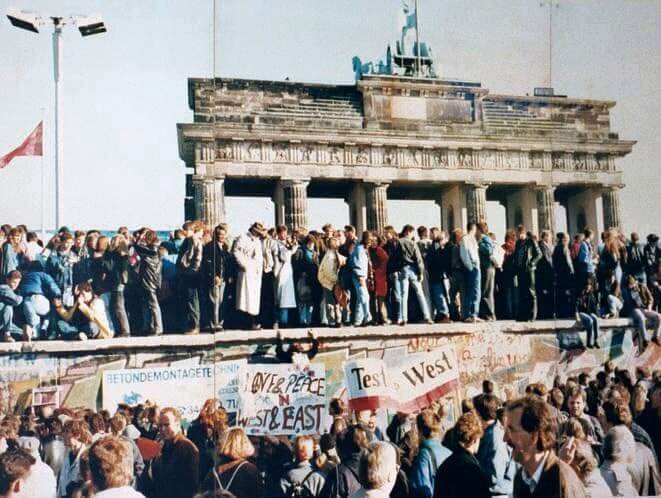
Who can forget the completely unforeseen events of November 9, 1989, when the gates of the wall were suddenly thrown open, or the electrifying spectacle of jubilant Berliners hacking away at the concrete barrier with hammers and chisels.
Before that night there had been no fewer than seven popular uprisings by citizens of Eastern European countries seeking to end the economic and political tyranny imposed by their Soviet “liberators” following the end of the Second World War. None succeeded. After that night, none failed.
Today’s socialists fancy themselves the vanguard of human progress. In fact, they are just regurgitating the same old policies, justified by the same old slogans that have caused so much misery and cost so many lives since “The Terror” was unleashed by French radicals as a means of imposing their vision of “Liberté, Égalité, Fraternité” on society almost 250 years ago.
Robespierre, Napoleon, Lenin, Stalin, Mussolini, Hitler, Mao, Ho Chi Min, Pol Pot… the list goes on and on. Today’s youth would benefit greatly from learning the history of these charlatans and the malignant creed they peddled. A good place to start would be the history of post-war Germany, and especially the city of Berlin. It’s a modern-day Tale of Two Cities well worth reading.