
By Alan McLauchlan
I have been “living” in Winnipeg for two weeks.
Let me qualify that statement. I am currently accompanying a family member who must undergo medical treatment for six weeks, which means we will be staying in the city for the duration of the treatment.
Fortunately, we were able to secure a room at a great facility on Portage Avenue that provides short-term, affordable accommodation for people in situations similar to ours.
When we were looking at our housing options, however, I was somewhat cautious about staying there because of its location near what is commonly considered Winnipeg’s downtown area.
I have travelled to Winnipeg for more than 50 years. I remember a downtown that was vibrant and busy, with large department stores, small independent shops and people filling the streets. Over the years, I have watched that downtown slowly change as stores have closed and businesses have moved away.
Then came COVID-19, which I am sure did little to help the situation.
Office workers began working from home, and many of the people who once filled the downtown streets disappeared.
When people leave an area, something inevitably fills the vacuum. In many cities, that has meant an increase in visible homelessness, addiction and other social problems. Winnipeg is certainly not alone in facing these challenges.
My first concern about our choice of accommodation was simple: Would we be safe?
I enjoy going for walks. Would I feel safe walking through the neighbourhood? Would our vehicle be safe? Would we return to find our apartment untouched?
Our first real look at the neighbourhood came at the corner of Ellice Avenue and Furby Street. It was late afternoon on a Sunday and traffic was relatively light.
As we approached the intersection, a young woman, perhaps 25 years old, slowly crossed diagonally through the intersection. She appeared to be intoxicated by some substance and completely oblivious to the traffic around her. She was staring upward, walking slowly and forcing vehicles to wait.
We watched in amazement.
I come from a rural area where we live on a lake isolated from the challenges of “big city life”. We go into town about once a week, and being retired, we simply don’t spend much time in cities. We had seen people intoxicated by alcohol before, but what we were witnessing appeared to be something very different.
As we continued down Furby Street, we saw groups of people gathered along the sidewalks. Some groups consisted of 10 or 12 people; others were only one or two. Many appeared to be intoxicated or struggling with mental health issues.
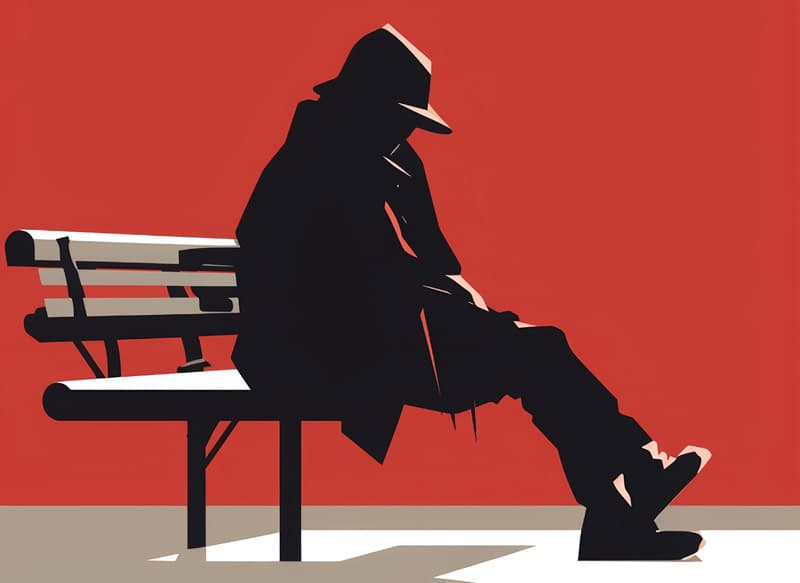
As we turned onto Portage Avenue, we saw people lying on the ground and on benches. Once again, my concerns about our decision to stay in the area came rushing back.
Our building has 24-hour security, and after two weeks, I can say that we feel quite safe. In fact, my experience inside the building has been very different from what I feared.
When I sit outside or walk through the neighbourhood, I see most of the people struggling on the streets east and north of that intersection. I’m sure there are other problem areas throughout Winnipeg, but I can only comment on what I have personally seen.
And what I have seen has stayed with me.
I see the young woman standing on the median, bent over in what is commonly referred to as the “fentanyl fold,” as vehicles rush past her.
Then she suddenly straightens, steps toward traffic, crosses the lanes and staggers back to the sidewalk, traffic stops and lets her by.
I see the middle-aged man carefully repacking a backpack containing what appears to be almost everything he owns.
I see a group of 10 people sitting together on a street corner. They aren’t necessarily drinking or using drugs. They are simply socializing because, perhaps, they have nowhere else to go and little else to do.
I see a woman alone in a wheelchair, slowly pushing herself along the sidewalk while holding a sign asking for help.
I see the little grey car, parked at seven am, on a side street, with six or seven people standing around it. A female is sitting in the passenger seat, while her male counterpart is counting money that has been “chipped in” from the group. You don’t have to be a rocket scientist to know what is happening here.
I see the street people standing in the rain with no place to go.
Do you remember the torrential downpours we had this summer?
I was safe and dry inside my apartment, looking out the window. Across the street, I watched about 10 people standing outside with no shelter, no raincoats and apparently nothing to protect them from the storm.
They stood there and became completely soaked as they watched the cars go by, waiting and hoping the rain would eventually stop.
It is difficult to watch.
Is all lost in Winnipeg’s inner city?
I don’t think it is.
Because I see other things, too.
I see a family out for a bike ride, enjoying a summer afternoon and perhaps completely unaware that the person they just passed on the sidewalk was struggling with addiction.
I see immigrants heading off to work, building a new life in a community they believe offers them more opportunity than the places they left behind.
I see a worker from a social agency walking from person to person, offering water and a sandwich.
And I see something else that gives me hope: eight out of every ten houses in some of the neighbourhoods I have walked through show obvious signs of care.
There are renovations, gardens, freshly painted homes and yards that are clearly maintained by people who take pride in where they live.
So, there is hope.
But the question remains: How did we get here?
How did a society with so much wealth, knowledge and resources reach a point where people are sleeping on sidewalks, struggling with addiction, living with mental illness or simply having nowhere to go?
And perhaps more importantly, how do we move forward?
I don’t believe the people I see on these streets should simply be viewed as statistics. They are people. Each one has a history, a family, a story and, somewhere along the way, a series of circumstances that brought them to where they are today.
I know some people will never accept help. Some may be too proud. Others may have progressed too far into addiction. Some may be dealing with mental-health challenges that make accepting help extremely difficult.
But I believe we still have to try.
We have to try because these are not numbers on a spreadsheet.
They are people.
And if we have the ability to help even some of them find their way back, then surely we have an obligation to do so.
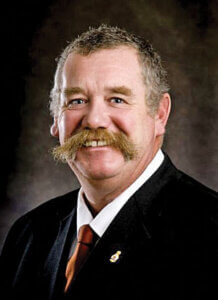
Alan McLauchlan is a former mayor of The Pas, Manitoba. He is a well-known leader in his community.