
Gabrielle Chartrand with the View from The Pas
When I moved from New York City to The Pas four and a half years ago, I thought I understood what it meant to be outdoors. I had walked urban paths, escaped to parks and travelled widely.
But I did not yet understand the luxury of stepping outside your door and finding the boreal forest waiting – or of looking up on a clear night and seeing the Milky Way instead of a dome of city light.
That change in perspective is partly why this year’s Trails Manitoba: Trail Talks event felt so important. From September 18 to 19, the group brought trail stewards, volunteers, community leaders and outdoor champions north for knowledge sharing, networking and on-trail experiences. The published event description promised two days of connection and an opportunity to showcase northern Manitoba’s landscapes; by every account, the weekend delivered – and then some.
The gathering began as a practical challenge: how do you persuade people from southern Manitoba to travel north, and how do you make the long drive part of the experience rather than an obstacle? With transportation support from the Town of The Pas Destination Marketing Committee, the answer was a charter bus leaving Winnipeg and collecting participants in Portage la Prairie, Dauphin and Swan River. It was transportation, yes – but it also became a moving meeting room. By the time the group reached the North, people had already started building the relationships that are the real engine of a grassroots conference.
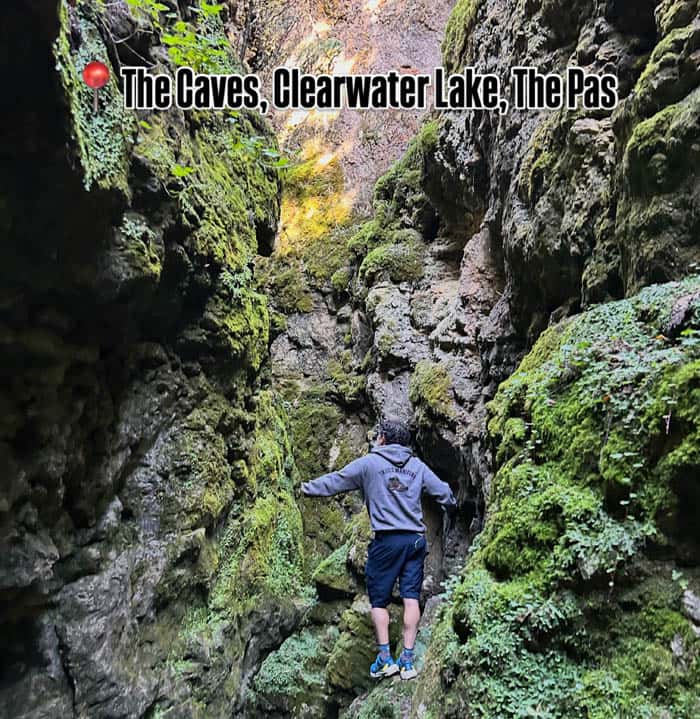
Rather than asking visitors to understand the North from a conference chair alone, the program took them into the landscape. At Clearwater Lake Provincial Park, the group explored the caves trail and its geology with local guidance. In Flin Flon, Leslie Beck and other members from Wâhkôhtowin Trails, led a walking tour that included Phantom Lake, Flinty’s Boardwalk and the campground trail infrastructure.
In Cranberry Portage, guided by Alain Proulx, participants walked snowshoe and ski trails tucked into the boreal forest.
One of the most memorable stops for the group came at the Seven Sacred Teachings signs, where Indigenous artist and educator Kellene Blouin met the group with her drum and shared the meaning of the teachings. Later, at the Cranberry Portage Legion, she performed hoop dancing and invited conference speaker Aaron Webb to join her. Local volunteers provided dinner, musicians filled the room and the community offered the kind of welcome that cannot be packaged by a convention centre: food prepared in several homes, a barbecue outside the door and neighbours pitching in because guests had come a long way.
As someone who traded a city life for ten acres near The Pas, this is the part of the story I recognize most deeply. Rural hospitality is not a slogan. It is a chain of small acts – someone cooking pierogies, someone tuning a guitar, someone opening the Legion, someone making sure the bus can park safely – that adds up to a visitor feeling they belong.
Saturday’s formal conference at University College of the North shifted the conversation from scenery to strategy.
The agenda opened with a land acknowledgement and welcome, followed by Ashleigh Hall, manager of the Provincial Trails Coordination Office, with a provincial update. Michelle Archie of Harbinger Consultancy presented on understanding the economic impact of trails.
The panel, “The Trail Economy, Different Perspectives” brought together David Bosiak, Michela Carriere and Brigitte Sandron. Bosiak spoke from the viewpoints of municipal leadership and the Northgate Trails; Carriere brought experience connected to Big Eddy Lodge and Aski Holistic Adventures; and Sandron contributed expertise from Clear Lake Country and her former work with Travel Manitoba. Patrick Lucas of the Indigenous Youth Mountain Bike Program then delivered “Dirt Relations,” a talk Tim Coffin described as having the clarity and energy of a TED Talk.
After lunch, Aaron Webb shared “Phoenix: The Mantario Story,” recounting the collaboration required to reopen the Mantario Trail after wildfire damage. Jeana Manning, chair of the Trails Manitoba board, presented “Trails Manitoba: Building a Connected Manitoba,” before participants moved into a round-table review.
The day’s speakers did not treat trails as decorative extras. They discussed them as public infrastructure that can support tourism, community health, reconciliation, environmental stewardship and local pride—a view echoed in Manitoba’s own trails strategy, which emphasizes connectivity, collaboration, long-term sustainability and trail tourism.
Coffin’s enthusiasm makes sense. Trails Manitoba, founded in 1993, serves as a provincial umbrella for the volunteer associations, charities, Indigenous organizations and municipalities that build and steward trails. It helps groups access resources and funding for everything from new routes to benches, lighting, signage and programming. The organization is also Manitoba’s provincial lead for the Trans Canada Trail.
Provincial policy recognizes the same broad value: trails support health, social connection, quality of life and economic opportunities for communities and trail-related businesses.
For those accustomed to measuring return on investment only in hotel receipts and restaurant bills, Trail Talks offered a wider accounting. Good trails can make a community more attractive to visitors, newcomers and businesses. They give residents an affordable place to move, meet and breathe. They can support aging in place by offering accessible routes close to home. They can become classrooms, cultural spaces and connectors between communities. The Province of Manitoba describes trails as pathways to healthy people and thriving communities; in the North, that idea is visible in everyday use.
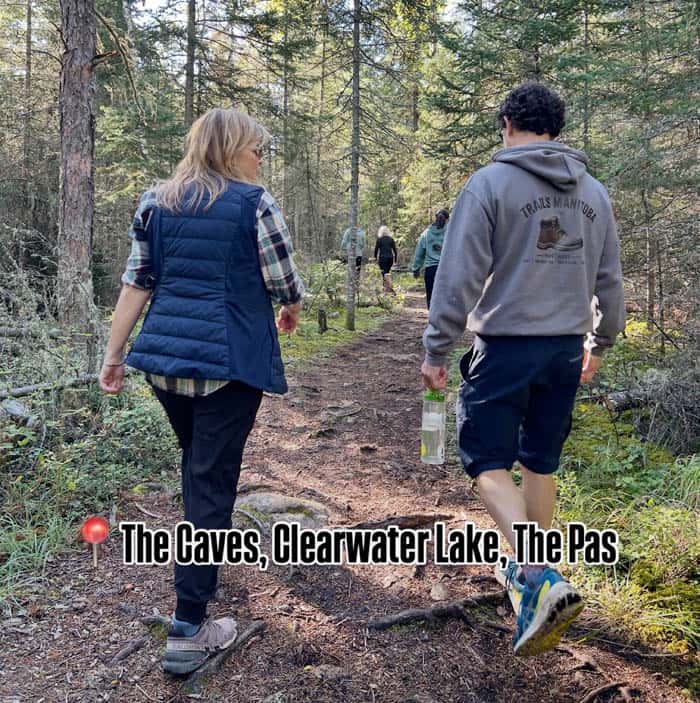
After the conference sessions, four guides led participants through the Opasquia Trails at Grace Lake in The Pas. Because the visitors were trail builders, the tour focused less on identifying birds and plants and more on construction: how the boardwalk was built, which hurdles volunteers faced, what problems they solved and what may come next. The site’s floating boardwalk was a particular point of pride, and organizers came away describing it as the longest floating boardwalk in Manitoba.
Trail counters installed in August provided an early measure of local enthusiasm. McLauchlan reported 6,084 visits to the viewing platform and 1,788 entries onto the trail in roughly 40 days. Those figures match what residents already see: regular walkers, retirees driving out from town, families stopping by and locals joining tours when a bus appears. Even the most carefully designed tourism campaign cannot manufacture that kind of lived-in credibility.
The final excursion to Round the Bend Farms brought the weekend’s themes together around an open fire. Visitors toured the farm, collected eggs, saw pigs and bison up close, and shared bison and chicken for dinner. For rural residents, some of those experiences may feel ordinary. For people who have never picked a vegetable or stood near a bison, they can be transformative. The evening reminded participants that a trail does not end at the tree line. It can lead into agriculture, food, culture, small business and stories told face-to-face.
McLauchlan’s ambitions reach beyond the existing trails at Grace Lake. He envisions extending the town trail from Margaret Barbour Collegiate Institute across Grace Lake, linking with Opasquia Trails and continuing through the surrounding road network to form a loop of roughly 15 kilometres. His larger vision is provincial: communities connected by trails the way northern snowmobile routes already connect riders in the winter.
That idea stayed with me. Since moving north, I have learned that distance is real, but so is ingenuity. Trail Talks’ charter bus overcame one form of distance. Connected trail systems could overcome another, giving people reasons to travel slowly through Swan River, The Pas, Cranberry Portage, Flin Flon, Snow Lake, Thompson and beyond. The possibilities are not only recreational. They include overnight stays, meals, guides, local crafts, maintenance work, equipment rentals and the less measurable economic benefit of people deciding a community is somewhere they could build a life.
Coffin called Trails Manitoba “small but mighty”– two staff members backed by a board of twelve – and Trail Talks showed what that phrase looks like in practice. It looks like volunteer trail stewards sharing solutions with government staff. It looks like Indigenous teachings offered on the land. It looks like a rural college transforming a conference meal into a northern showcase. It looks like trail builders learning from wildfire recovery on the Mantario Trail, then carrying those lessons home.
I came north because of a person, but I stayed because of a place. Trails helped me understand that place: the moss underfoot, the fresh air, the light between the trees and the way strangers become neighbours when they meet on a path. Trail Talks 2026 gave visitors a concentrated version of that discovery. The challenge now is to keep building – not just more kilometres of trail, but more connections between people, communities and the wider province.
Gabrielle Chartrand moved to The Town of The Pas four years ago after spending a decade in New York City. She holds a Bachelor of Design from Toronto Metropolitan University with a major in communications and a minor in marketing. Chartrand brings her love of art and non-profit experience to a community who is most welcoming to an outsider. Chartrand serves as the Chair of the Destination Marketing Committee and the Treasurer of The Pas Guest List Inc.
For more information on Trail Talks 2026 click here.