
By Sherrie Versluis
There are so many reasons as to why gardening is the biggest hobby in North America. Just ask any gardener why they are so passionate about it and there will never be a simple, short answer. There is the joy of seeing success when that first bud erupts and never mind when the flower shows all its glory. Or, when those delicious vegetables are ready to be harvested there is such satisfaction in enjoying a truly homegrown meal. But, there is so much more to it. The feeling of working with the earth and revelling in that connection with nature activates all our senses. The feel of the soil in our hands, the smell of the earth, the taste of the fresh air, the view of the blue sky above us, and the sounds that soothe our soul. The most prominent sounds being, the music of our precious songbirds. There’s something about the magic of songbirds.
Even for those who may say they are not into birds, they really are. Who doesn’t connect with seeing their first robin in spring or when flocks of geese fly over us in fall? What about those summer mornings enjoying your coffee outside with the first songs of the day by your local chickadees and friends? It really is something you can’t help but notice and its effects on our spirit is undeniable. The frequency range of human hearing is anywhere from 20 to 20,000 Hz. Bird songs have frequencies that range from 1000 Hz to 8000 Hz which is said to be the ‘sweet spot’ of human hearing and why we find such pleasure in their sounds.
Some of the greatest singers in our region include warblers, sparrows, finches, and kinglets with frequency ranges that can exceed 10,000 Hz when spring courting songs are at their finest. A Blackpoll warblers range can be anywhere from 8,000 to 10,000 Hz making their vocals something that we would not be able to ignore the beauty of. These sounds produce electromagnetic sound vibrations that have an amazing positive effect on the human brain and our health. Studies using an encephalogram (EEG) to measure what positive frequencies like those of our songbirds have on the human body showed the incredible benefits. There was a considerable reduction in stress, strain, blood pressure, heart rate, and respiration rates. On days spent listening to prolonged times of these beneficial frequencies, people experienced better sleep, concentration, and focus, and just an overall relaxed demeanour. Who can deny what a peaceful feeling and great sleep follows a day in the garden?
Besides the physical benefits songbirds bring to us, they play a vital role in the health of our gardens and trees as well. House wrens are an extremely beneficial bird to encourage into the yard as they consume literally thousands of nuisance garden insects like canker worms, cabbage moths, grasshoppers, and flies. An easy way to attract House wrens is to put up a birdhouse designed just for them. By accommodating them you can benefit from their glorious music which is almost shocking that such a voice could come from a tiny little bird. During courtship, the male will sing 9-11 times per minute with a variety of sounds that include 12-16 syllables and are a delight to hear. The female will respond with shorter notes filled with joy as she approves of her choice in a mate.
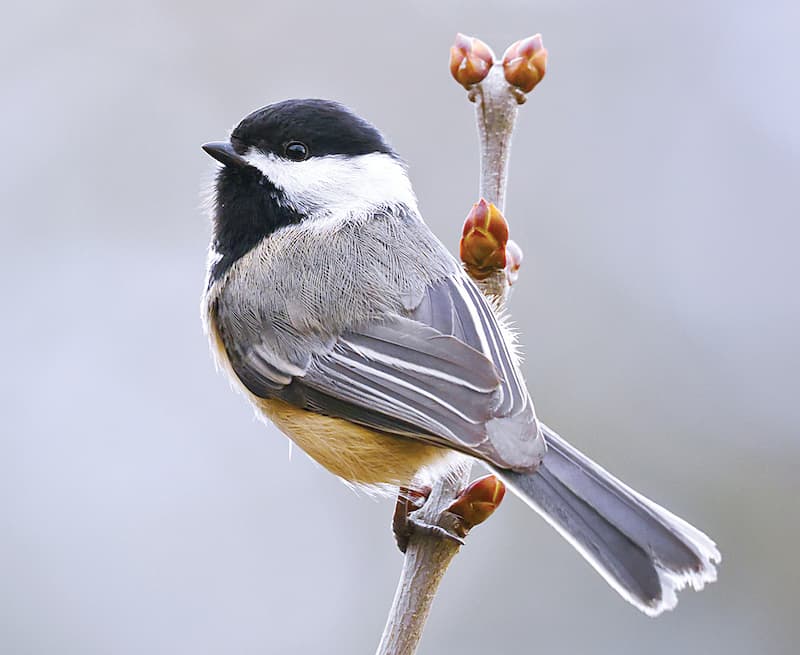
Black-capped chickadees are a year-round visitor and a favourite among many for their cheerful ways and almost tame behaviour. They eat a variety of seed and insects and can be seen throughout summer foraging in trees looking under every leaf and in the bark for insects of all kinds but one of their favourites are gall aphids.
Chickadees have a full library of unique songs that includes 16 different types of vocalizations. Chickadees are easily attracted to the yard with a birdfeeder filled with black oil sunflower seed year-round.
One of my favourite spring/summer visitors is the Baltimore oriole. These birds are spectacular on all levels, their sound and appearance are outstanding. Their vibrant plumage brings a tropical feel and their song is that of a solo symphony experience. The males spring song has the most rich flutelike tone that is often described as a pure, liquid sound. The female also sings although a shorter song but just to elevate their glory, mated pairs will sing the finest, harmonic duet that have frequencies sure to bring goosebumps. Orioles are very beneficial to fruit-bearing trees as they pollinate in spring by their delight of the nectar in blossoms. Later in the season, they are one of the biggest consumers of the dreaded Tent caterpillars. Orioles can be brought into the yard by offering grape jelly, oranges, and sugar water in feeders designed just for them. Truly worth the invite!
My own personal joys of gardening to date have been focused on flowers. I enjoy Dahlia’s for their sacred geometry design of blooms, osteospermum daisies because of their happy disposition and blends of colour but one of my favourite gardens is filled with native wildflowers. These perennials bloom throughout the season and bless me with colours and scents and are visited by many birds in every season as the flowers and seeds attract many species. However your garden grows, allow your senses to feed your soul by taking in all of the pleasures gardening offers. Let the magic of songbirds add to your experience and if you have to explain why you are going to buy MORE flowers, just say, it’s all about the frequencies.
Sherrie Versluis is an avid birder and owns The Preferred Perch on St. Mary’s Road in St. Vital. Phone: 204-257-3724.
Check out the Preferred Perch online here.
To go back to the main page, click here.