
Gardening: Is it in conflict with nature?
By Dorothy Dobbie
I live for the summers, when I spend every moment I can outside. It reinvigorates me both physically and spiritually. I am outside as I write this, breathing in the scent of flowers, listening to the wind chimes as a gentle breeze wafts through the air, hearing bird calls and the rustle of leaves. The sun is beating down on the land lending it energy and animating all living things.
My earliest memories are all about being outside, playing in the snow, chasing bumble bees, picking wildflowers, lying in the grass listening to the insects. I climbed a tree at five and spent a glorious time feeling like a bird high up in the air before I realized I didn’t know how to get down.
All this shapes who you are and, without that time in nature and being at one with the natural world, I don’t know what becomes of people. Do you lose an essential part of your humanity? Because I cannot see how you can be anything without that communion.
Does gardening change that? Some folks think it is an unnatural interference with the way things are. I argue that everything animate in the world changes their environment as part of the natural order. Just by growing, a plant’s roots irrevocably change the world of billions of microorganisms.
Along the way some organisms fail, and others get on board to assist the plant in its exploration of this world. Nor is this a selfish plant invasion. The plant brings energy from the sun absorbed and transformed in its leaves, and the organisms help breakdown nutrients to help the plant flourish.
The gardener may offer new adventures to the plants and the microorganisms by giving both the gift of exploration and travel.
This just speeds up the chances that the two will find each other eventually through some other agency – birds dropping seeds, squirrels storing food for the winter. The wind, the rain, meandering animals and even the changing patterns of climate are all agents in this world. Humans just do it with intent.
What matters is the interaction, whether by simply enjoying a walk in the woods (where, by the way, we are changing the world as we move), or by laboring in the garden, creating an image of nature that pleases your soul.
Our job is to ensure that we never lose this communion, that we continue to understand the critical need to provide opportunities for natural encounters even in the hearts of the ever-growing city scapes.
That’s one reason why I always champion the need to protect and enhance our urban forests. Trees are a critical vector for so many living things in nature. So is grass, despite the hate-on for lawns by some misinformed environmentalists. Both help retain moisture in the landscape and contribute to cooling. While this is a municipal kind of gardening, it is even more critical than the lovely pots of flowers planted by the city.
Right now, there is a concerted effort to steer homeless people off the riverbanks and wild forests in Winnipeg and force them to attend “safe” drug injection sites where there are no redeeming traces of green. I can’t think of much that would be more wrongheaded. Why not plant more downtown trees, and set aside green encampment spaces until this dreadful scourge of hopelessness and homelessness is dealt with.
Instead, it is popular to encourage civic “densification”, which is necessarily setting up barriers between people and nature. This is so counterproductive. In Japan, they have a national network of forested spaces called “shinrin yoku”, meaning forest bathing, because they have discovered and understand the healing value of being in nature. Does it matter if this space in natural or nurtured – perhaps the smallest bit if the synergy of local spaces in not respected, but some nature is better than no nature.
And don’t give up in winter, either. Fill your house with plants. They will reward you with cleaner air if you have enough of them and they will fill your heart with hope as you help them through their indoor imprisonment.
Gardening versus nature? There is no adversity here. Get as much of both as you can and you will live longer, happier, healthier lives.
Nature, edited
By Shauna Dobbie
A garden is full of life and surprises and things that grow with or without human touch; it is not nature, though.
You could say that humans are part of nature so what we do is natural, but that makes the term too broad. This could quickly become a semantic argument and nobody wants to read that. So, let’s say that, for the purpose of my discussion, the opposite of nature is artifice. And when I say artifice, think more of the “art” in the word than the artificial, as in flavouring.
A garden is artful artifice, but not in the way that a play or a painting is because it hasn’t come completely from the artist’s mind. It relies, instead, on a balance of things the artist cannot control, and that makes it all the more thrilling.
It is not a painting of nature, because it is made of actual soil, water, plants and the creatures that arrive there, whether invited or not. But it is still an interpretation of nature. The gardener chooses which parts of nature to include, and which to leave out (or try to). We take a wild meadow, woodland edge or riverbank in our minds and turn it into something with paths, boundaries, focal points and a view from the kitchen window. We borrow nature’s materials, but arrange them according to human ideas of beauty, comfort, abundance or even of what a garden ought to mean.
A gardener can choose to imitate nature fairly rigorously. Food forests and permaculture rely heavily on natural processes. A food forest is a deliberately planted, multi-layered garden meant to produce food.
Fruit or nut trees form a canopy, with smaller trees, fruiting shrubs, vines, herbs, groundcovers and sometimes root crops below. The idea is to make the layers work together, rather than planting a row of one crop and another row of something else. Permaculture is the broader philosophy behind it: a way of designing useful systems by observing how natural systems function. But food forests are not forests that happen to feed people. They are gardens that need planning, planting, watering while they establish, pruning, harvesting and a firm hand when one plant tries to take over the others. The more successful they are, the more human thought and effort has gone into them.
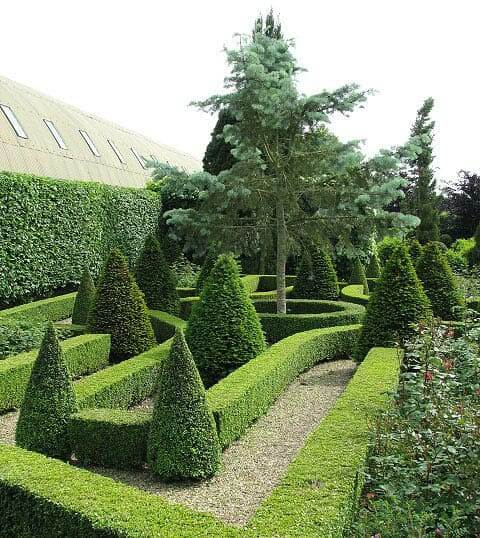
At the other end of the scale are the gardens that make no attempt to look wild. Knot gardens became fashionable in Tudor England: low clipped hedges or aromatic herbs were planted according to elaborate geometric patterns, usually best appreciated from an upper window or a viewing mound. Victorian carpet beds were similar, in which low annuals and foliage plants were laid out in scrolls, stars, crests and other patterns. Both are acts of horticultural control. They may not be overly popular right now, but they are absolutely gardens. How do you equate them with nature?
Traditional Japanese gardening is also a matter of deliberate composition, although it can be so subtle that it seems to have escaped human intervention. A few rocks may suggest mountains. Raked gravel may stand for water. A path may curve so that the visitor encounters the garden slowly instead of seeing it all at once. Pines are clipped, moss is encouraged, and each view is considered. The Japanese idea of shakkei, or borrowed scenery, is particularly revealing. A distant mountain, a stand of trees, or even a building beyond the property may be framed and incorporated into the garden. Nature is not simply there. It has been selected, edited and presented.
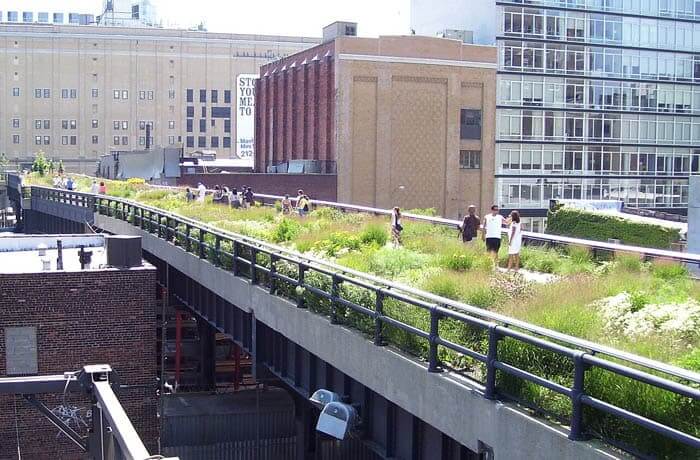
The more modern New Perennial Movement, associated with Dutch designer Piet Oudolf, has gardens that look like idealized meadows or prairies. Large swaths of liatris, echinacea, rudbeckias and grasses flow together. Plants are chosen not only for their flowers, but for their height, texture, colour, seedheads and the way they look as they decline. You leave the seedheads standing through winter because their dry forms are part of the composition.
You may know this style from the Lurie Garden in Chicago’s Millennium Park, the High Line in New York City, or the Entry Garden Walk at the Toronto Botanical Garden. These gardens look natural but are incredibly difficult to achieve. Someone has decided where every drift begins and ends, what will stand up in August, what will carry the eye through the planting and what will remain handsome after the first snowfall. The more effortless the effect, the more expertise it takes to create and maintain it.
Of course, not every garden imitates nature. A vegetable garden may be about abundance, a rose garden about fragrance and colour, and a front yard about making a house look cared for. But they all have something in common: a gardener’s decisions set the terms. In nature, there is no one to say that a plant is in the wrong place, that the colours clash, or that the view needs a little more blue.
This distinction is important, partly because gardens can be genuinely good for the wider natural world without pretending to be the same thing. A garden can feed pollinators, provide cover for birds, soak up rainwater and make room for a surprising number of living things. Of course, it can also introduce invasive plants, rely on pesticides that harm more than their intended targets, or be kept so scrupulously tidy that it offers little shelter or overwintering space for insects.
Calling all gardens nature can make it harder to see those differences. A native-plant border may be a wonderful thing. It is still not the same as a remnant tallgrass prairie, with its complicated web of plants, insects, soil organisms, weather and time.
A garden is one of the ways we express our relationship with nature. It is where we admit that we want beauty, food, shade, order, memory and a place to sit. It is also where nature refuses to follow the plan entirely. Plants die. Birds arrive. Seedlings appear in the wrong places. Bugs, rabbits and deer invade.
We do not make nature when we make a garden. We make a living work of art from nature’s materials and then enter into a long negotiation with it. That seems to me more interesting, and more honest, than calling it nature.
To get more gardening inspiration check out Canada’s Local Gardener website.